

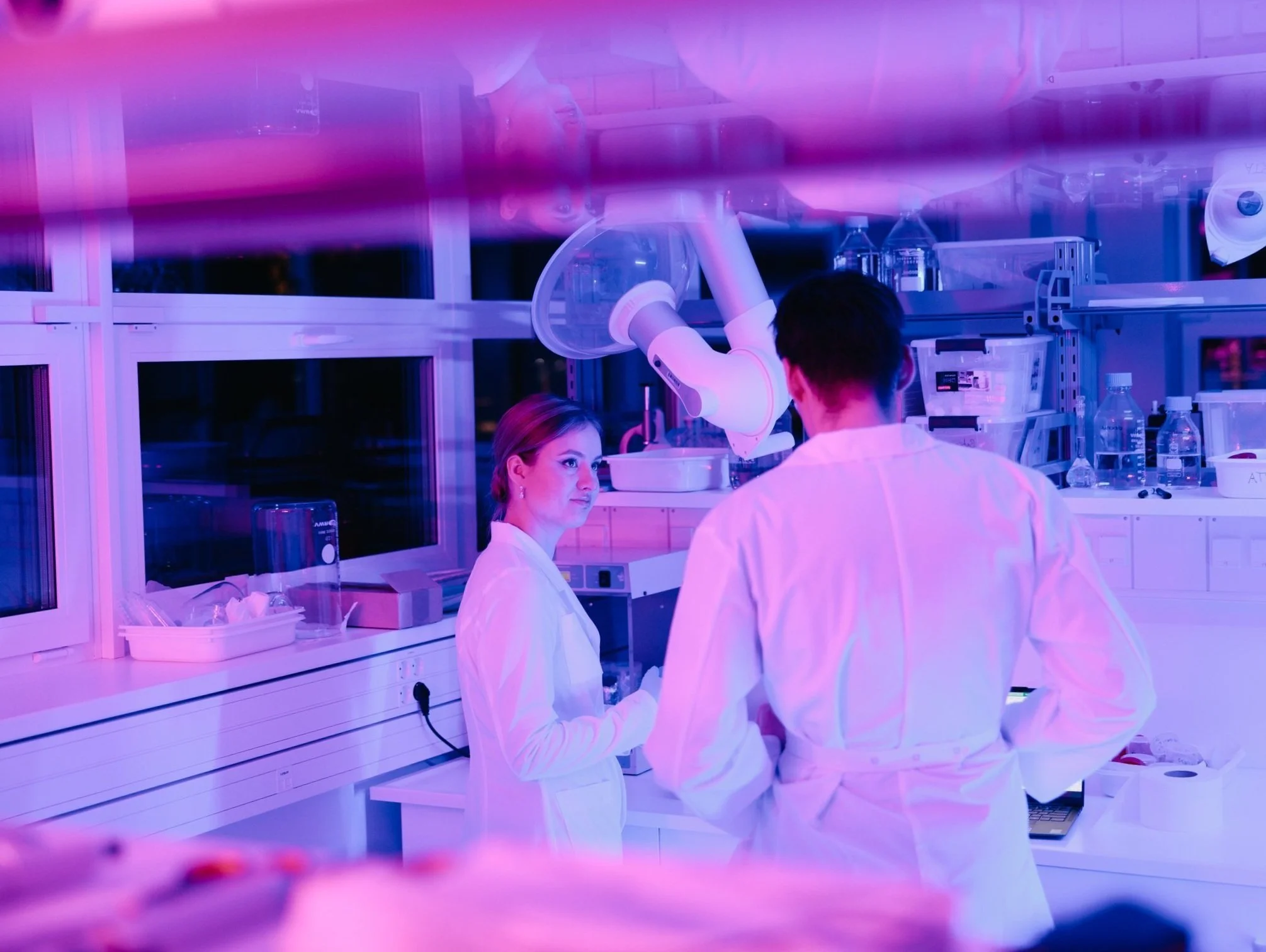
Scientific Impact
Our work drives discovery by turning complex metabolic data into validated scientific breakthroughs. From co-authoring research in top-tier journals like Nature to leading innovative ESF-funded projects, we ensure every analysis contributes to the global advancement of life sciences.
ENG below
Mikroorganismu ekoloģijas principos balstīta sarežģītu mikrobiālo sabiedrību kultivācijas sistēmas izstrādne

Projekta līguma numurs: Nr. 1.1.1.3/1/24/A/104. Projekta īstenošanas termiņš: 01.09.2025. - 31.08.2028. (36 mēneši)
Projekta vadītājs / vadošais pētnieks: LU Medicīnas un dzīvības zinātņu fakultātes asoc. prof. Dr.biol. Jānis Liepiņš
Projekts tiek īstenots Latvijas Universitātes vadībā sadarbībā ar SIA “BIOSAN”, laboratorijas iekārtu ražotāju.
Projekta mērķis: Izstrādāt tehnisko risinājumu (tehnoloģiju un bioreaktora prototipu), kas ļautu pielietot mikrobu ekoloģijas principus ierobežota apjoma kompleksu mikrobu kopienu kultivēšanai, monitoringam un bagātināšanai bioreaktoru sistēmā.
Projekta rezultāti sekmēs sekojošas Latvijas Pētniecības un inovācijas viedās specializācijas stratēģijas (RIS3) prioritātes:
Biomedicīna, medicīnas tehnoloģijas, farmācija, biotehnoloģija;
Fotonika un viedie materiāli, tehnoloģijas un inženiertehniskās sistēmas.
Plānotās projekta darbības:
Inovatīva uz mikrobu ekoloģiju balstīta tehnoloģija ierobežota apjoma sarežģītu mikrobu kopienu kultivēšanai un uzraudzībai.
Maza mēroga, vairāku tilpumu bioreaktora prototips, kas pielāgots sarežģītu mikrobu kopienu uzturēšanai.
Inovatīvās tehnoloģijas un bioreaktora prototipa validācija.
Projekta koordinācija, atbalsts, rezultātu izplatīšana un publiskā komunikācija.
Projekta rezultāti:
Trīs atvērtās piekļuves Q1 zinātniskās publikācijas.
Divas lielo datu kopas , kas glabājas publiskajos datu repozitorijos, nodrošinot datu ilgtspēju un ievērojot FAIR principus.
Bioreaktora prototips , kas apvieno vairākus paralēlus kultivācijas tilpumus, nelielu darba tilpumu ar funkcijām, kas ļauj kontrolēti pārvietot masu starp kultivēšanas tilpumiem.
Zinātība (know-how) kā ieviest mikroorganismu ekoloģijā balstītus principus maza mēroga bioreaktoru projektēšanā.
Agrīnās karjeras pētnieka nodarbināšana – 1 jauna pētnieka amata vieta.
Periodu pārskati
-
Izveidota bioreaktora prototipa strukturālā shēma, sastādīts komponenšu saraksts un identificēti ražotāji un iespējamie piegādātāji.
Uzsākts darbs ar sintētiskām mikroorganismu (raugu) sabiedrībām. Veikti eksperimenti arī ar sintētiskām sabiedrībām, kas satur trīs raugu celmus, nosakot kokultivācijas partneru šūnu skaita proporciju ietekmi uz daudzveidību sabiedrībā.
Baktēriju un sēņu paraugiem pārbaudītas dažādas ekstrakcijas metodes, lai noteiktu optimālo metodi tālākām metabolomikas analīzēm.
-
Izveidotas minireaktora vāka modifikācijas, kas atļauj multikanāla bioreaktorā starp kanāliem noritēt masas pārnesei, vienlaicīgi neietekmējot mēģenes rotāciju. Uzsākts darbs pie masas pārneses regulācijas.
Izveidoti ģenētiski un fenotipiski izsekojami triptofāna auksotrofu raugu celmi. Izveidoto celmu šķērsbarošanās (cross feeding) kokultūrā apstiprināta mikrokultivēšanas sistēmā. Turpinās dažādu mikroorganismu taksonu sintētiskās sabiedrības izveide.
Pārbaudīta sasaldēšanas/atkušanas ietekme uz baktēriju un sēņu biomasas metabolītu daudzveidību. Veikta padziļināta baktēriju un sēņu kultivēšanas barotņu padziļināta analīze, lai pielāgotu analīzes datu apstrādes metodes mikroorganismu sabiedrību metaboloma analīzei.
-
Izveidota multikanālu bioreaktora vadības rīka algoritma pirmā versija, kas atļauj iestatīt vēlamā tilpuma pārnesi, pārneses secību starp izvēlēto kanālu un citiem kanāliem, kā arī pāri palikušās barotnes izvadi.
Veikti triptofāna auksotrofo un prototrofā raugu celmu kokultūras testi, kuros apstiprināti iepriekš mikrokultivēšanas sistēmā iegūtie rezultāti. Izstrādāta metode vairāku zarnu nūjiņu celmu fenotipiskai identifikācijai no kokultūru paraugiem.
Uzsākta sintētiskās raugu sabiedrības fermentācijas paraugu metabolītu analīze.
-
Izveidota kultivēšanas sistēmas prototipa lietotāja saskarne, kā arī veikta prototipa mezglu testēšana.
Iegūti dati par triptofāna auksotrofo un prototrofo raugu celmu kokultūras izturēšanos bioreaktoru sistēmā ar integrētu kopējo rezervuāru.
Veikts deviņu atšķirīgu metabolomu metožu salīdzinājums, lai izvēlētos optimālo (vislielākais atpazīto metabolītu skaits iespējami minimizējot veicamos analīzes soļus) kokultivāciju analīzē. Optimizētā metode izmantota raugu sabiedrību analīzē.
Development of a cultivation system for complex microbial communities based on microbial ecology principles
Project contract number: No. 1.1.1.3/1/24/A/104 Project Implementation Period: 01.09.2025 – 31.08.2028 (36 months) Project Manager / Principal investigator: Assoc. Prof. Dr. biol. Jānis Liepiņš, Faculty of Medicine and Life Sciences, University of Latvia Partnership: The project is implemented under the leadership of the University of Latvia in collaboration with laboratory equipment manufacturer SIA "BIOSAN".
Project objective: To develop a technical solution (technology and a bioreactor prototype) that enables the application of microbial ecology principles for the cultivation, monitoring, and enrichment of complex microbial communities in a limited-volume bioreactor system.
The project results will contribute to the following priorities of the Latvian Research and Innovation Strategy for Smart Specialization (RIS3):
Biomedicine, medical technologies, pharmacy, and biotechnology.
Photonics and smart materials, technologies, and engineering systems.
Planned project activities:
Innovative technology based on microbial ecology for the cultivation and monitoring of limited-volume complex microbial communities.
Small-scale, multi-vessel bioreactor prototype adapted for the maintenance of complex microbial communities.
Validation of the innovative technology and the bioreactor prototype.
Project coordination, support, dissemination of results, and public communication.
Project results:
Three open-access Q1 scientific publications.
Two large datasets stored in public data repositories, ensuring data sustainability and compliance with FAIR principles.
A bioreactor prototype combining multiple parallel cultivation vessels and a small working volume with functions that allow controlled mass transfer between vessels.
Know-how on implementing microbial ecology principles in the design of small-scale bioreactors.
Employment of an early-career researcher – 1 new research position.
Reports for the periods
-
Structural diagram of the bioreactor prototype developed, component list compiled, and manufacturers and potential suppliers identified.
Work commenced with synthetic microorganism (yeast) communities. Experiments were also conducted with synthetic communities containing three yeast strains, determining the impact of cell count proportions of co-cultivation partners on community diversity.
Various extraction methods tested for bacterial and fungal samples to determine the optimal method for further metabolomics analyses.
-
Modifications of the minireactor lid have been created, which allow mass transfer to occur between the channels in a multichannel bioreactor without affecting the tube rotation. Work has been initiated on the regulation of mass transfer.
Genetically and phenotypically traceable tryptophan auxotrophic yeast strains have been created. Cross-feeding of the created strains in co-culture has been confirmed in a microcultivation system. The creation of a synthetic community of various microbial taxa continues.
The effect of freezing/thawing on the diversity of bacterial and fungal biomass metabolites has been tested. An in-depth analysis of bacterial and fungal culture media has been performed to adapt the analysis data processing methods to the analysis of the metabolome of microbial communities.
-
The first version of the algorithm for the multichannel bioreactor control tool has been created, which allows setting the desired volume transfer, the transfer sequence between the selected channel and other channels, as well as the output of the remaining medium.
Coculture tests of tryptophan auxotrophic and prototrophic yeast strains have been performed, confirming the results previously obtained in the microcultivation system. A method has been developed for the phenotypic identification of several E. coli strains from coculture samples.
Metabolite analysis of fermentation samples of a synthetic yeast community has been initiated.
-
A user interface for the cultivation system prototype was developed, and prototype components were tested.
Data were obtained on the behavior of co-cultures of tryptophan-auxotrophic and prototrophic yeast strains in a bioreactor system with an integrated shared reservoir.
Nine different metabolomics methods were compared to select the optimal one—defined as yielding the highest number of identified metabolites while minimizing analytical steps—for co-culture analysis. The optimized method was used to analyze the yeast communities.
Case Studies
Real-world impact through advanced metabolic profiling
Our analytical workflows transform complex samples into actionable insights. From optimizing drug delivery to mapping microbiome-informed treatments, we partner with researchers to solve critical challenges in biotechnology and medicine.